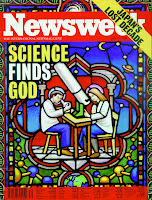
An Exclusive Interview with Former British Atheist Professor Antony Flew
Dear Friends:
The following is an exclusive interview that will be published in the Winter 2005 issue of “Philosophia Christi” the journal of the Evangelical Philosophical Society (www.biola.edu/philchristi). “Philosophia Christi” is one of the top circulating philosophy of religion journals in the world and we are pleased to offer up the definitive interview on this breaking story of global interest.
Prof. Antony Flew, 81 years old, is a legendary British philosopher and atheist and has been an icon and champion for unbelievers for decades. His change of mind is significant news, not only about his personal journey, but also about the persuasive power of the arguments modern theists have been using to challenge atheistic naturalism.
The interviewer is Dr. Gary Habermas, a prolific philosopher and historian from Liberty University who has debated Flew several times. They have maintained a friendship despite their years of disagreement on the existence of God.
Sincerely,
9 December 2004
Craig J. Hazen, Ph.D.
Professor of Comparative Religion, Biola University
Editor, “Philosophia Christi”
****************o*****************
My Pilgrimage from Atheism to Theism
An Exclusive Interview with Former British Atheist Professor Antony Flew
DR. ANTONY FLEW
Professor of Philosophy, Former atheist, author, and debater
DR. GARY R. HABERMAS
Professor Philosophy and Theology, Editorial Board for “Philosophia Christi”
Antony Flew and Gary Habermas met in February 1985 in Dallas, Texas. The occasion was a series of debates between atheists and theists, featuring many influential philosophers, scientists, and other scholars.1
A short time later, in May 1985, Flew and Habermas debated at Liberty University before a large audience. The topic that night was the resurrection of Jesus.2 Although Flew was arguably the world’s foremost philosophical atheist, he had intriguingly also earned the distinction of being one of the chief philosophical commentators on the topic of miracles.3
Habermas specialized on the subject of Jesus’ resurrection.4 Thus, the ensuing dialogue on the historical evidence for the central Christian claim was a natural outgrowth of their research. Over the next twenty years, Flew and Habermas developed a friendship, writing dozens of letters, talking often, and dialoguing twice more on the resurrection. In April 2000 they participated in a live debate on the Inspiration Television Network, moderated by John Ankerberg.5
In January 2003 they again dialogued on the resurrection at California Polytechnic State University–San Luis Obispo.6
During a couple telephone discussions shortly after their last dialogue, Flew explained to Habermas that he was considering becoming a theist. While Flew did not change his position at that time, he concluded that certain philosophical and scientific considerations were causing him to do some serious rethinking. He characterized his position as that of atheism standing in tension with several huge question marks.
Then, a year later, in January 2004, Flew informed Habermas that he had indeed become a theist. While still rejecting the concept of special revelation, whether Christian, Jewish or Islamic, nonetheless he had concluded that theism was true. In Flew’s words, he simply “had to go where the evidence leads.”7
The following interview took place in early 2004 and was subsequently modified by both participants throughout the year. This nontechnical discussion sought to engage Flew over the course of several topics that reflect his move from atheism to theism.8 The chief purpose was not to pursue the details of any particular issue, so we bypassed many avenues that would have presented a plethora of other intriguing questions and responses. These were often tantalizingly ignored, left to ripen for another discussion. Neither did we try to persuade each another of alternate positions.
Our singular purpose was simply to explore and report Flew’s new position, allowing him to explain various aspects of his pilgrimage. We thought that this in itself was a worthy goal.
Along the way, an additional benefit emerged, as Flew reminisced about various moments from his childhood, graduate studies, and career.
HABERMAS: Tony, you recently told me that you have come to believe in the existence of God. Would you comment on that?
FLEW: Well, I don’t believe in the God of any revelatory system, although I am open to that. But it seems to me that the case for an Aristotelian God who has the characteristics of power and also intelligence, is now much stronger than it ever was before. And it was from Aristotle that Aquinas drew the materials for producing his five ways of, hopefully, proving the existence of his God. Aquinas took them, reasonably enough, to prove, if they proved anything, the existence of the God of the Christian revelation. But Aristotle himself never produced a definition of the word “God,” which is a curious fact. But this concept still led to the basic outline of the five ways. It seems to me, that from the existence of Aristotle’s God, you can’t infer anything about human behaviour. So what Aristotle had to say about justice (justice, of course, as conceived by the Founding Fathers of the American republic as opposed to the “social” justice of John Rawls9) was very much a human idea, and he thought that this idea of justice was what ought to govern the behaviour of individual human beings in their relations with others.
HABERMAS: Once you mentioned to me that your view might be called Deism. Do you think that would be a fair designation?
FLEW: Yes, absolutely right. What Deists, such as the Mr. Jefferson who drafted the American Declaration of Independence, believed was that, while reason, mainly in the form of arguments to design, assures us that there is a God, there is no room either for any supernatural revelation of that God or for any transactions between that God and individual human beings.
HABERMAS: Then, would you comment on your “openness” to the notion of theistic revelation?
FLEW: Yes. I am open to it, but not enthusiastic about potential revelation from God. On the positive side, for example, I am very much impressed with physicist Gerald Schroeder’s comments on Genesis 1.10 That this biblical account might be scientifically accurate raises the possibility that it is revelation.
HABERMAS: You very kindly noted that our debates and discussions had influenced your move in the direction of theism.11 You mentioned that this initial influence contributed in part to your comment that naturalistic efforts have never succeeded in producing “a plausible conjecture as to how any of these complex molecules might have evolved from simple entities.”12 Then in your recently rewritten introduction to the forthcoming edition of your classic volume God and Philosophy, you say that the original version of that book is now obsolete. You mention a number of trends in theistic argumentation that you find convincing, like big bang cosmology, fine tuning and Intelligent Design arguments. Which arguments for God’s existence did you find most persuasive?
FLEW: I think that the most impressive arguments for God’s existence are those that are supported by recent scientific discoveries. I’ve never been much impressed by the kalam cosmological argument, and I don’t think it has gotten any stronger recently. However, I think the argument to Intelligent Design is enormously stronger than it was when I first met it.
HABERMAS: So you like arguments such as those that proceed from big bang cosmology and fine tuning arguments?
FLEW: Yes.
HABERMAS: You also recently told me that you do not find the moral argument to be very persuasive. Is that right?
FLEW: That’s correct. It seems to me that for a strong moral argument, you’ve got to have God as the justification of morality. To do this makes doing the morally good a purely prudential matter rather than, as the moral philosophers of my youth used to call it, a good in itself.
(Compare the classic discussion in Plato’s Euthyphro.)
HABERMAS: So, take C. S. Lewis’s argument for morality as presented in Mere Christianity.13 You didn’t find that to be very impressive?
FLEW: No, I didn’t. Perhaps I should mention that, when I was in college, I attended fairly regularly the weekly meetings of C. S. Lewis’s Socratic Club. In all my time at Oxford these meetings were chaired by Lewis. I think he was by far the most powerful of Christian apologists for the sixty or more years following his founding of that club. As late as the 1970s, I used to find that, in the USA, in at least half of the campus bookstores of the universities and liberal art colleges which I visited, there was at least one long shelf devoted to his very various published works.
HABERMAS: Although you disagreed with him, did you find him to be a very reasonable sort of fellow?
FLEW: Oh yes, very much so, an eminently reasonable man.
HABERMAS: And what do you think about the ontological argument for the existence of God?
FLEW: All my later thinking and writing about philosophy was greatly influenced by my year of postgraduate study under the supervision of Gilbert Ryle, the then Professor of Metaphysical Philosophy in the University of Oxford, as well as the Editor of Mind. It was the very year in which his enormously influential work on The Concept of Mind14 was first published. I was told that, in the years between the wars, whenever another version of the ontological argument raised its head, Gilbert forthwith set himself to refute it.
My own initial lack of enthusiasm for the ontological argument developed into strong repulsion when I realized from reading the Theodicy15 of Leibniz that it was the identification of the concept of Being with the concept of Goodness (which ultimately derives from Plato’s identification in The Republic of the Form or Idea of the Good with the Form or the Idea of the Real) which enabled Leibniz in his Theodicy validly to conclude that an universe in which most human beings are predestined to an eternity of torture is the “best of all possible worlds.”
HABERMAS: So of the major theistic arguments, such as the cosmological, teleological, moral, and ontological, the only really impressive ones that you take to be decisive are the scientific forms of teleology?
FLEW: Absolutely. It seems to me that Richard Dawkins constantly overlooks the fact that Darwin himself, in the fourteenth chapter of The Origin of Species, pointed out that his whole argument began with a being which already possessed reproductive powers. This is the creature the evolution of which a truly comprehensive theory of evolution must give some account.
Darwin himself was well aware that he had not produced such an account. It now seems to me that the findings of more than fifty years of DNA research have provided materials for a new and enormously powerful argument to design.
HABERMAS: As I recall, you also refer to this in the new introduction to your God and Philosophy.
FLEW: Yes, I do; or, since the book has not yet been published, I will!
HABERMAS: Since you affirm Aristotle’s concept of God, do you think we can also affirm Aristotle’s implications that the First Cause hence knows all things?
FLEW: I suppose we should say this. I’m not at all sure what one should think concerning some of these very fundamental issues. There does seem to be a reason for a First Cause, but I’m not at all sure how much we have to explain here. What idea of God is necessary to provide an explanation of the existence of the universe and all which is in it?
HABERMAS: If God is the First Cause, what about omniscience, or omnipotence?
FLEW: Well, the First Cause, if there was a First Cause, has very clearly produced everything that is going on. I suppose that does imply creation “in the beginning.”
HABERMAS: In the same introduction, you also make a comparison between Aristotle’s God and Spinoza’s God. Are you implying, with some interpreters of Spinoza, that God is pantheistic?
FLEW: I’m noting there that God and Philosophy has become out of date and should now be seen as an historical document rather than as a direct contribution to current discussions. I’m sympathetic to Spinoza because he makes some statements which seem to me correctly to describe the human situation(TANRI ANLAYIŞINDA DEĞERLER EGEMEN OLMAYINCA PANTEIST SPINOZA’YA YAKIN HİSSETMESİ DE DOĞAL OLMAKTADIR. DEĞERLERDEN DOLAYI SAVRULAN SAVRUKLUĞUYLA KALIYOR.) But for me the most important thing about Spinoza is not what he says but what he does not say(DEĞERLER ÖNEMLİ OLMAYINCA SÖYLENİLMEYENLER ÖNEMLİ OLMAKTADIR). He does not say that God has any preferences either about or any intentions concerning human behaviour or about the eternal destinies of human beings(İŞTE BU PANTEİST GERÇEK. DEĞERLERDEN YOKSUNLUK).
HABERMAS: What role might your love for the writings of David Hume play in a discussion about the existence of God? Do you have any new insights on Hume, given your new belief in God?
FLEW: No, not really.
HABERMAS: Do you think Hume ever answers the question of God?
FLEW: I think of him as, shall we say, an unbeliever. But it’s interesting to note that he himself was perfectly willing to accept one of the conditions of his appointment, if he had been appointed to a chair of philosophy at the University of Edinburgh. That condition was, roughly speaking, to provide some sort of support and encouragement for people performing prayers and executing other acts of worship. I believe that Hume thought that the institution of religious belief could be, and in his day and place was, socially beneficial.16
I, too, having been brought up as a Methodist, have always been aware of this possible and in many times and places actual benefit of objective religious instruction. It is now several decades since I first tried to draw attention to the danger of relying on a modest amount of compulsory religious instruction in schools to meet the need for moral education, especially in a period of relentlessly declining religious belief. But all such warnings by individuals were, of course, ignored. So we now have in the UK a situation in which any mandatory requirements to instruct pupils in state funded schools in the teachings of the established or any other religion are widely ignored. The only official attempt to construct a secular substitute was vitiated by the inability of the moral philosopher on the relevant government committee to recognize the fundamental difference between justice without prefix or suffix and the “social” justice of John Rawls’s A Theory of Justice.
I must some time send you a copy of the final chapter of my latest and presumably last book, in which I offer a syllabus and a program for moral education in secular schools.17 This is relevant and important for both the US and the UK. To the US because the Supreme Court has utterly misinterpreted the clause in the Constitution about not establishing a religion: misunderstanding it as imposing a ban on all official reference to religion. In the UK any effective program of moral education has to be secular because unbelief is now very widespread.
HABERMAS: In God and Philosophy, and in many other places in our discussions, too, it seems that your primary motivation for rejecting theistic arguments used to be the problem of evil. In terms of your new belief in God, how do you now conceptualise God’s relationship to the reality of evil in the world?
FLEW: Well, absent revelation, why should we perceive anything as objectively evil? The problem of evil is a problem only for Christians. For Muslims everything which human beings perceive as evil, just as much as everything we perceive as good, has to be obediently accepted as produced by the will of Allah. I suppose that the moment when, as a schoolboy of fifteen years, it first appeared to me that the thesis that the universe was created and is sustained by a Being of infinite power and goodness is flatly incompatible with the occurrence of massive undeniable and undenied evils in that universe, was the first step towards my future career as a philosopher! It was, of course, very much later that I learned of the philosophical identification of goodness with existence!
HABERMAS: In your view, then, God hasn’t done anything about evil.
FLEW: No, not at all, other than producing a lot of it.
HABERMAS: Given your theism, what about mind-body issues?
FLEW: I think those who want to speak about an afterlife have got to meet the difficulty of formulating a concept of an incorporeal person. Here I have again to refer back to my year as a graduate student supervised by Gilbert Ryle, in the year in which he published The Concept of Mind. At that time there was considerable comment, usually hostile, in the serious British press, on what was called “Oxford Linguistic Philosophy.” The objection was usually that this involved a trivialization of a very profound and important discipline.
I was by this moved to give a talk to the Philosophy Postgraduates Club under the title “Matter which Matters.” In it I argued that, so far from ignoring what Immanuel Kant described as the three great problems of philosophers—God, Freedom and Immortality—the linguistic approach promised substantial progress towards their solution.
I myself always intended to make contributions in all those three areas. Indeed my first philosophical publication was relevant to the third.18 Indeed it was not very long after I got my first job as a professional philosopher that I confessed to Ryle that if ever I was asked to deliver the Gifford Lectures I would give them under the title The Logic of Mortality.19 They were an extensive argument to the conclusion that it is simply impossible to create a concept of an incorporeal spirit.
HABERMAS: Is such a concept necessarily required for the notion of an afterlife?
FLEW: Dr. Johnson’s dictionary defines death as the soul leaving the body. If the soul is to be, as Dr. Johnson and almost if perhaps not quite everyone else in his day believed it to be, something which can sensibly be said to leave its present residence and to take up or be forced to take up residence elsewhere, then a soul must be, in the philosophical sense, a substance rather than merely a characteristic of something else.
My Gifford Lectures were published after Richard Swinburne published his, on The Evolution of the Soul.20 So when mine were reprinted under the title Merely Mortal? Can You Survive Your Own Death?21 I might have been expected to respond to any criticisms which Swinburne had made of my earlier publications in the same area. But the embarrassing truth is that he had taken no notice of any previous relevant writings either by me or by anyone published since World War II. There would not have been much point in searching for books or articles before that date since Swinburne and I had been the only Gifford lecturers to treat the question of a future life for the sixty years past. Even more remarkably, Swinburne in his Gifford Lectures ignored Bishop Butler’s decisive observation: “Memory may reveal but cannot constitute personal identity.”
HABERMAS: On several occasions, you and I have dialogued regarding the subject of near death experiences, especially the specific sort where people have reported verifiable data from a distance away from themselves. Sometimes these reports even occur during the absence of heartbeat or brain waves.22 After our second dialogue you wrote me a letter and said that, “I find the materials about near death experiences so challenging. . . . this evidence equally certainly weakens if it does not completely refute my argument against doctrines of a future life . . . .”23 In light of these evidential near death cases, what do you think about the possibility of an afterlife, especially given your theism?
FLEW: An incorporeal being may be hypothesized, and hypothesized to possess a memory. But before we could rely on its memory even of its own experiences we should need to be able to provide an account of how this hypothesized incorporeal being could be identified in the first place and then—after what lawyers call an affluxion of time—reidentified even by himself or herself as one and the same individual spiritual being. Until we have evidence that we have been and presumably—as Dr. Johnson and so many lesser men have believed—are to be identified with such incorporeal spirits I do not see why near-death experiences should be taken as evidence for the conclusion that human beings will enjoy a future life—or more likely if either of the two great revealed religions is true—suffer eternal torment.
HABERMAS: I agree that near death experiences do not evidence the doctrines of either heaven or hell. But do you think these evidential cases increase the possibility of some sort of an afterlife, again, given your theism?
FLEW: I still hope and believe there’s no possibility of an afterlife.
HABERMAS: Even though you hope there’s no afterlife, what do you think of the evidence that there might be such, as perhaps indicated by these evidential near death cases? And even if there is no clear notion of what sort of body might be implied here, do you find this evidence helpful in any way? In other words, apart from the form in which a potential afterlife might take, do you still find these to be evidence for something?
FLEW: It’s puzzling to offer an interpretation of these experiences. But I presume it has got to be taken as extrasensory perceiving by the flesh and blood person who is the subject of the experiences in question. What it cannot be is the hypothesized incorporeal spirit which you would wish to identify with the person who nearly died, but actually did not. For this concept of an incorporeal spirit cannot properly be assumed to have been given sense until and unless some means has been provided for identifying such spirits in the first place and re-identifying them as one and the same individual incorporeal spirits after the affluxion of time. Until and unless this has been done we have always to remember Bishop Butler’s objection: “Memory may reveal but cannot constitute personal identity.”24
Perhaps I should here point out that, long before I took my first university course in philosophy, I was much interested in what in the UK, where it began, is still called psychical research although the term “parapsychology” is now usually almost everywhere else. Perhaps I ought here to confess that my first book was brashly entitled A New Approach to Psychical Research,25 and my interest in this subject continued for many years thereafter.
HABERMAS: Actually you have also written to me that these near death experiences “certainly constitute impressive evidence for the possibility of the occurrence of human consciousness independent of any occurrences in the human brain.”26
FLEW: When I came to consider what seemed to me the most impressive of these near death cases I asked myself what is the traditional first question to ask about “psychic” phenomena. It is, “When, where, and by whom were the phenomena first reported?” Some people seem to confuse near death experiences with after death experiences. Where any such near death experiences become relevant to the question of a future life is when and only when they appear to show “the occurrence of human consciousness independent of any occurrences in the human brain.”
HABERMAS: Elsewhere, you again very kindly noted my influence on your thinking here, regarding these data being decent evidence for human consciousness independent of “electrical activity in the brain.”27 If some near death experiences are evidenced, independently confirmed experiences during a near death state, even in persons whose heart or brain may not be functioning, isn’t that is quite impressive evidence? Are near death experiences, then, the best evidence for an afterlife?
FLEW: Oh, yes, certainly. They are basically the only evidence.
HABERMAS: What critical evaluation would you make of the three major monotheisms?
Are there any particular philosophical strengths or weaknesses in Christianity, Judaism, or Islam?
FLEW: If all I knew or believed about God was what I might have learned from Aristotle, then I should have assumed that everything in the universe, including human conduct, was exactly as God wanted it to be. And this is indeed the case, in so far as both Christianity and Islam are predestinarian, a fundamental teaching of both religious systems. What was true of Christianity in the Middle Ages is certainly no longer equally true after the Reformation. But Islam has neither suffered nor enjoyed either a Reformation or an Enlightenment. In the Summa Theologiae we may read:
As men are ordained to eternal life throughout the providence of God, it likewise is part of that providence to permit some to fall away from that end; this is called reprobation . . . . Reprobation implies not only foreknowledge but also is something more. . .28
What and how much that something more is the Summa contra Gentiles makes clear: . . . just as God not only gave being to things when they first began, but is also—as the conserving cause of being—the cause of their being as long as they last . . . . Every operation, therefore, of anything is traced back to Him as its cause.29
The Angelic Doctor, however, is always the devotedly complacent apparatchik. He sees no problem about the justice of either the inflicting of infinite and everlasting penalties for finite and temporal offences, or of their affliction upon creatures for offences which their Creator makes them freely choose to commit. Thus, the Angelic Doctor assures us:
In order that the happiness of the saints may be more delightful to them and that they may render more copious thanks to God . . . they are allowed to see perfectly the sufferings of the damned . . . Divine justice and their own deliverance will be the direct cause of the joy of the blessed, while the pains of the damned will cause it indirectly . . . the blessed in glory will have no pity for the damned.30
The statements of predestinarianism in the Qur’an are much more aggressive and unequivocal than even the strongest in the Bible. Compare the following from the Qur’an with that from Romans 9.
As for the unbelievers, alike it is to them Whether thou hast warned them or hast not warned them They do not believe.31
God has set a seal on their hearts and on the hearing And on the eyes is a covering And there awaits them a mighty chastisement.32
In the UK the doctrine of Hell has for the last century or more been progressively deemphasised, until in 1995 it was explicitly and categorically abandoned by the Church of England. It would appear that the Roman Catholic Church has not abandoned either the doctrine of Hell nor predestination.
Thomas Hobbes spent a very large part of the forty years between the first publication of the King James Bible and the first publication of his own Leviathan engaged in biblical criticism, one very relevant finding of which I now quote: And it is said besides in many places [that the wicked] shall go into everlasting fire; and that the worm of conscience never dieth; and all this is comprehended in the word everlasting death, which is ordinarily interpreted everlasting life in torments. And yet I can find nowhere that any man shall live in torments everlastingly. Also, it seemeth hard to say that God who is the father of mercies; that doth in heaven and earth all that he will, that hath the hearts of all men in his disposing; that worketh in men both to do, and to will; and without whose free gift a man hath neither inclination to good, nor repentance of evil, should punish men’s transgressions without any end of time, and with all the extremity of torture, that men can imagine and more.33
As for Islam, it is, I think, best described in a Marxian way as the uniting and justifying ideology of Arab imperialism. Between the New Testament and the Qur’an there is (as it is customary to say when making such comparisons) no comparison. Whereas markets can be found for books on reading the Bible as literature, to read the Qur’an is a penance rather than a pleasure. There is no order or development in its subject matter. All the chapters (the suras) are arranged in order of their length, with the longest at the beginning. However, since the Qur’an consists in a collection of bits and pieces of putative revelation delivered to the prophet Mohammad by the Archangel Gabriel in classical Arab on many separate but unknown occasions, it is difficult to suggest any superior principle of organization.
One point about the editing of the Qur’an is rarely made although it would appear to be of very substantial theological significance. For every sura is prefaced by the words “In the Name of God, the Merciful, the Compassionate.” Yet there are references to Hell on at least 255 of the 669 pages of Arberry’s rendering of the Qur’an34 and quite often pages have two such references.
Whereas St. Paul, who was the chief contributor to the New Testament, knew all the three relevant languages and obviously possessed a first class philosophical mind, the Prophet, though gifted in the arts of persuasion and clearly a considerable military leader, was both doubtfully literate and certainly ill-informed about the contents of the Old Testament and about several matters of which God, if not even the least informed of the Prophet’s contemporaries, must have been cognizant.
This raises the possibility of what my philosophical contemporaries in the heyday of Gilbert Ryle would have described as a knock-down falsification of Islam: something which is most certainly not possible in the case of Christianity. If I do eventually produce such a paper it will obviously have to be published anonymously.
HABERMAS: What do you think about the Bible?
FLEW: The Bible is a work which someone who had not the slightest concern about the question of the truth or falsity of the Christian religion could read as people read the novels of the best novelists. It is an eminently readable book.
HABERMAS: You and I have had three dialogues on the resurrection of Jesus. Are you any closer to thinking that the resurrection could have been a historical fact?
FLEW: No, I don’t think so. The evidence for the resurrection is better than for claimed miracles in any other religion. It’s outstandingly different in quality and quantity, I think, from the evidence offered for the occurrence of most other supposedly miraculous events. But you must remember that I approached it after considerable reading of reports of psychical research and its criticisms. This showed me how quickly evidence of remarkable and supposedly miraculous events can be discredited.
What the psychical researcher looks for is evidence from witnesses, of the supposedly paranormal events, recorded as soon as possible after their occurrence. What we do not have is evidence from anyone who was in Jerusalem at the time, who witnessed one of the allegedly miraculous events, and recorded his or her testimony immediately after the occurrence of that allegedly miraculous event. In the 1950s and 1960s I heard several suggestions from hard-bitten young Australian and American philosophers of conceivable miracles the actual occurrence of which, it was contended, no one could have overlooked or denied. Why, they asked, if God wanted to be recognized and worshipped, did God not produce a miracle of this unignorable and undeniable kind?
HABERMAS: So you think that, for a miracle, the evidence for Jesus’ resurrection is better than other miracle claims?
FLEW: Oh yes, I think so. It’s much better, for example, than that for most if not of the, so to speak, run of the mill Roman Catholic miracles. On this see, for instance, D. J. West.35
HABERMAS: You have made numerous comments over the years that Christians are justified in their beliefs such as Jesus’ resurrection or other major tenants of their faith. In our last two dialogues I think you even remarked that for someone who is already a Christian there are many good reasons to believe Jesus’ resurrection. Would you comment on that?
FLEW: Yes, certainly. This is an important matter about rationality which I have fairly recently come to appreciate. What it is rational for any individual to believe about some matter which is fresh to that individual’s consideration depends on what he or she rationally believed before they were confronted with this fresh situation. For suppose they rationally believed in the existence of a God of any revelation, then it would be entirely reasonable for them to see the fine tuning argument as providing substantial confirmation of their belief in the existence of that God.
HABERMAS: You’ve told me that you have a very high regard for John and Charles Wesley and their traditions. What accounts for your appreciation?
FLEW: The greatest thing is their tremendous achievement of creating the Methodist movement mainly among the working class. Methodism made it impossible to build a really substantial Communist Party in Britain and provided the country with a generous supply of men and women of sterling moral character from mainly working class families. Its decline is a substantial part of the explosions both of unwanted motherhood and of crime in recent decades.
There is also the tremendous determination shown by John Wesley in spending year after year riding for miles every day, preaching more than seven sermons a week and so on. I have only recently been told of John Wesley’s great controversy against predestination and in favor of the Arminian alternative. Certainly John Wesley was one of my country’s many great sons and daughters. One at least of the others was raised in a Methodist home with a father who was a local preacher.
HABERMAS: Don’t you attribute some of your appreciations for the Wesleys to your father’s ministry? Haven’t you said that your father was the first non-Anglican to get a doctorate in theology from Oxford University?
FLEW: Yes to both questions. Of course it was because my family’s background was that of Methodism. Yes, my father was also President of the Methodist Conference for the usual single year term and he was the Methodist representative of one or two other organizations. He was also concerned for the World Council of Churches. Had my father lived to be active into the early 1970s he would have wanted at least to consider the question of whether the Methodist Church ought not to withdraw from the World Council of Churches. That had by that time apparently been captured by agents of the USSR.36
HABERMAS: What do you think that Bertrand Russell, J. L. Mackie, and A. J. Ayer would have thought about these theistic developments, had they still been alive today?
FLEW: I think Russell certainly would have had to notice these things. I’m sure Mackie would have been interested, too. I never knew Ayer very well, beyond meeting him once or twice.
HABERMAS: Do you think any of them would have been impressed in the direction of theism? I’m thinking here, for instance, about Russell’s famous comments that God hasn’t produced sufficient evidence of his existence.37
FLEW: Consistent with Russell’s comments that you mention, Russell would have regarded these developments as evidence. I think we can be sure that Russell would have been impressed too, precisely because of his comments to which you refer. This would have produced an interesting second dialogue between him and that distinguished Catholic philosopher, Frederick Copleston.
HABERMAS: In recent years you’ve been called the world’s most influential philosophical atheist. Do you think Russell, Mackie, or Ayer would have been bothered or even angered by your conversion to theism? Or do you think that they would have at least understood your reasons for changing your mind?
FLEW: I’m not sure how much any of them knew about Aristotle. But I am almost certain that they never had in mind the idea of a God who was not the God of any revealed religion. But we can be sure that they would have examined these new scientific arguments.
HABERMAS: C. S. Lewis explained in his autobiography that he moved first from atheism to theism and only later from theism to Christianity. Given your great respect for Christianity, do you think that there is any chance that you might in the end move from theism to Christianity?
FLEW: I think it’s very unlikely, due to the problem of evil. But, if it did happen, I think it would be in some eccentric fit and doubtfully orthodox form: regular religious practice perhaps but without belief. If I wanted any sort of future life I should become a Jehovah’s Witness. But some things I am completely confident about. I would never regard Islam with anything but horror and fear because it is fundamentally committed to conquering the world for Islam. It was because the whole of Palestine was part of the land of Islam that Muslim Arab armies moved in to try to destroy Israel at birth, and why the struggle for the return of the still surviving refugees and their numerous descendents continue to this day.
HABERMAS: I ask this last question with a smile, Tony. But just think what would happen if one day you were pleasantly disposed toward Christianity and all of a sudden the resurrection of Jesus looked pretty good to you?
FLEW: Well, one thing I’ll say in this comparison is that, for goodness sake, Jesus is an enormously attractive charismatic figure, which the Prophet of Islam most emphatically is not.
1 “Christianity Challenges the University: An International Conference of Theists and Atheists,” Dallas, Texas, February 7–10, 1985, organized by Roy Abraham Varghese.
2 See Gary R. Habermas and Antony G. N. Flew, Did Jesus Rise from the Dead? The Resurrection Debate, ed. Terry L. Miethe (San Francisco: Harper & Row, 1987; Eugene, OR: Wipf and Stock, 2003).
3 Some examples by Antony Flew include “Miracles and Methodology,” in Hume’s Philosophy of Belief: A Study of His First Inquiry (London: Routledge and Kegan Paul, 1961); “The Credentials of Revelation: Miracle and History,” in God and Philosophy (New York: Dell, 1966); “Miracles,” in Encyclopedia of Philosophy, ed. Paul Edwards (New York: Macmillan, 1967); “The Impossibility of the Miraculous,” in Hume’s Philosophy of Religion, (Winston-Salem, NC: Wake Forest University Press, 1985); introduction to Of Miracles, by David Hume (La Salle, IL: Open Court, 1985); “Neo-Humean Arguments about the Miraculous” in In Defence of Miracles: A Comprehensive Case for God’s Action in History, ed. R. Douglas Geivett and Gary R. Habermas (Downers Grove, IL: Inter Varsity Press, 1997).
4 Some examples by Gary Habermas include The Risen Jesus and Future Hope (Lanham, MD: Rowman and Littlefield, 2003); The Historical Jesus: Ancient Evidence for the Life of Christ (Joplin, MO; College, 1996); The Resurrection of Jesus: An Apologetic (Grand Rapids, MI: Baker, 1980; Lanham, MD: University Press of America, 1984); “Knowing that Jesus’ Resurrection Occurred: A Response to Stephen Davis,” Faith and Philosophy 2 (1985): 295– 302; “Resurrection Claims in Non-Christian Religions,” Religious Studies 25 (1989): 167–77; “The Late Twentieth-Century Resurgence of Naturalistic Responses to Jesus’ Resurrection,” Trinity Journal 22 (2001): 179–96. For a more popular treatment, see Habermas and Michael R. Licona, The Case for the Resurrection of Jesus (Grand Rapids, MI: Kregel, 2004).
5 Gary R. Habermas and Antony G. N. Flew, Resurrected? An Atheist and Theist Debate, ed. John Ankerberg (Lanham, MD: Rowman and Littlefield, forthcoming).
6 The dialogue took place as a part of the Veritas Forum and is accessible at http://www.veritasforum.com/talks/httm.
7 Telephone conversation, September 9, 2004.
8 Both participants also agreed to the title of the interview.
9 John Rawls, A Theory of Justice (Cambridge, MA: Harvard University Press, 1971).
10 Gerald L. Schroeder, The Science of God: The Convergence of Scientific and Biblical Wisdom (New York: Broadway Books, 1998).
11 Letter from Antony Flew, November 9, 2000.
12 Antony Flew, “God and the Big Bang” (lecture, 2000), 5–6; this is a lecture commemorating the 140th anniversary of the British Association meeting regarding Charles Darwin’s The Origin of the Species.
13 C. S. Lewis, Mere Christianity (New York: Macmillan, 1980), especially Book 1.
14 Gilbert Ryle, The Concept of Mind (London: Hutchinson, 1948).
15 G. W. Leibniz, Theodicy, ed. A. Farrer, trans. E. M. Huggard (1710; London: Routledge and Kegan Paul, 1965).
16 Donald W. Livingston, Philosophical Melancholy and Delirium: Hume’s Pathology of Philosophy (Chicago: University of Chicago Press, 1998), 150.
17 Antony Flew, Social Life and Moral Judgment (New Brunswick, NH: Transaction, 2003).
18 Antony Flew, “Selves,” Mind (1949): 355–8.
19 Antony Flew, The Logic of Mortality (Oxford: Blackwell, 1987).
20 Richard Swinburne, The Evolution of the Soul (Oxford: Clarendon, 1986).
21 Antony Flew, Merely Mortal? Can You Survive Your Own Death? (Amherst, NY: Prometheus, 2000).
22 For many cases see Gary R. Habermas and J. P. Moreland, Beyond Death: Exploring the Evidence for Immortality (Wheaton, IL: Crossway, 1998; Eugene, OR: Wipf and Stock, 2003), chapters 7–9.
23 Letter from Antony Flew, September 6, 2000.
24 Joseph Butler, Butler’s Works, ed. W. E. Gladstone (Oxford: Clarendon, 1896), 1:387.
25 Antony Flew, A New Approach to Psychical Research (London: C. A. Watts, 1953).
26 Letter from Antony Flew, September 6, 2000.
27 Flew, “God and the Big Bang,” 2. Habermas’s influence on Flew’s statement here is noted in Flew’s letter of November 9, 2000 (cf. note 11 above).
28 Thomas Aquinas, Summa Theologiae, I, q.23, a.3.
29 Thomas Aquinas, Summa Contra Gentiles, Book 3, chapter 67.
30 Thomas Aquinas, Summa Theologiae, III, supp.94, a.1–3.
31 Qur’an 2, trans. Arthur J. Arberry (Oxford: Oxford University Press, 1998).
32 Qur’an 5.
33 Thomas Hobbes, Leviathan, ed. J. C. A. Gaskin (Oxford: Oxford University Press, 1998), 416, chapter 44.
34 This is the version of the Qur’an as “interpreted” by Arthur Arberry, in the Oxford University Press edition.
35 D. J. West, Eleven Lourdes Miracles (London: George Duckworth, 1957).
36 Bernard Smith, The Fraudulent Gospel: Politics and the World Council of Churches (London: Foreign Affairs, 1977).
37 See, for example, Bertrand Russell, Bertrand Russell Speaks His Mind, ed. Woodrow Wyatt (New York: Bard Books, 1960), 19–20.
http://www.biola.edu/antonyflew/flew-interview.pdf